
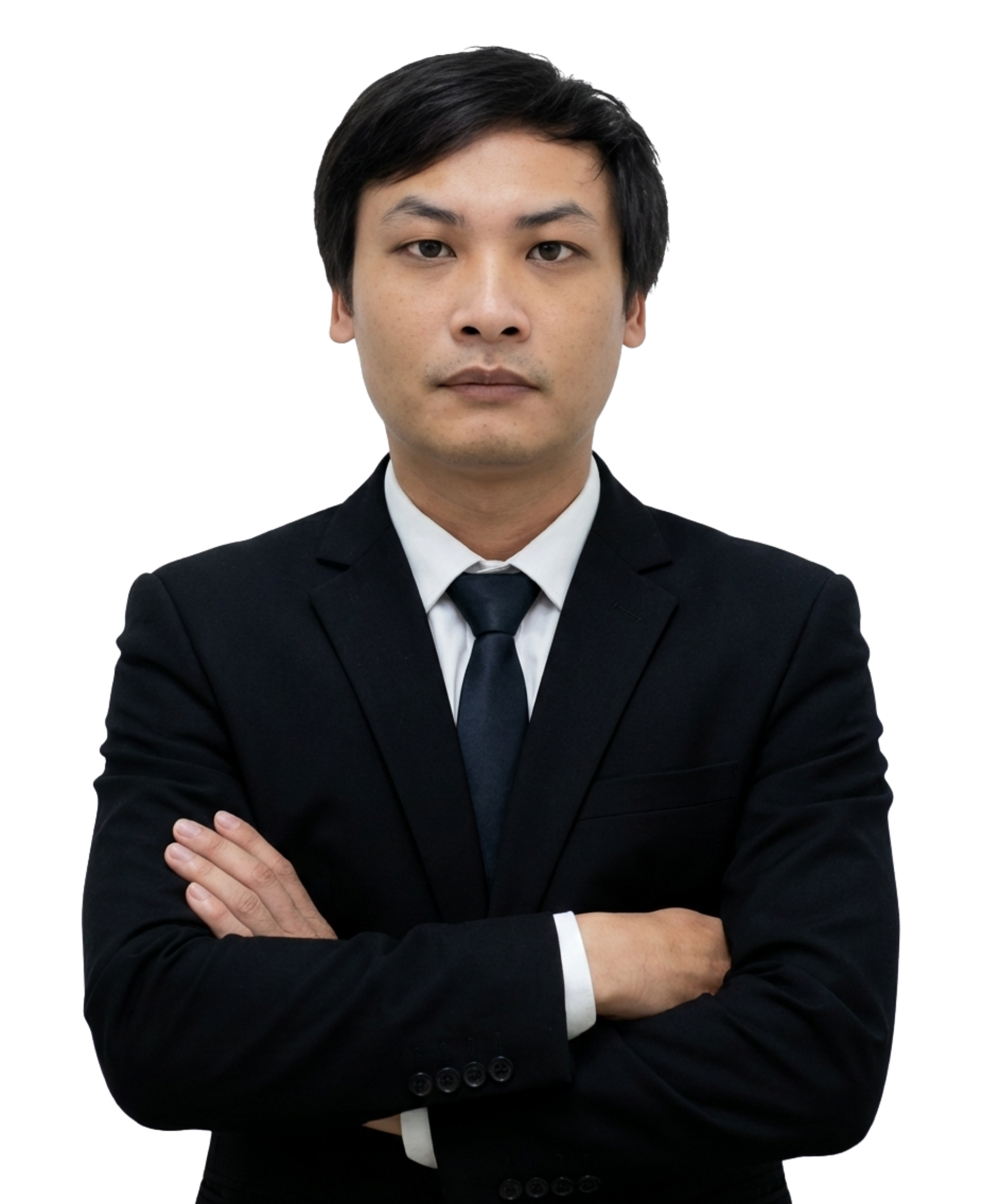
1. EDUCATIONAL BACKGROUND
- 2005-2011: Bachelor of Information Technology, HaNoi University of Science and Technology, Vietnam.
- 2013-2016: Master of Computer Science, Ho Chi Minh City University of Technology, Vietnam.
2. WORK EXPERIENCE
- 2014-2019: Lecturer, CAIT, Ton Duc Thang University, Vietnam.
- 2019-2020: Lecturer, Faculty of Information Technology, HUTECH University, Vietnam.
- 2020-2021: Research Associate (Secondment under H2020 project), InuTech GmbH, Germany.
- 2021-2023: Researcher, CirTech Institute, HUTECH University, Vietnam.
- 01/2026-now: Assistant Researcher, Institute for Computational Science and Artificial Intelligence, Van Lang University, Vietnam.
3. RESEARCH INTERESTS
- Machine learning and deep learning for 3D printing and inverse design, structural health monitoring, financial time series forecasting, and data mining/NLP.
- Physics-informed machine learning and hybrid AI models for optimizing additive manufacturing processes and predicting mechanical properties of 3D-printed structures.
- Explainable AI (XAI) techniques for interpretable materials design, enabling actionable engineering insights from complex models.
- Multi-modal 3D reconstruction and defect-aware modeling using computer vision and deep learning for digital twins and smart manufacturing.
- Hybrid signal processing and deep learning methods for time-series forecasting, anomaly detection, and structural health monitoring in engineering systems.
4. RESEARCH GRANTS
|
No |
Project name |
Levels of Organization,Name of Organization |
Role (Pricinpal investigator or member) |
Duration |
Results |
|
1 |
History of European Urbanism in the 20th Century |
H2020-MSCA-RISE-European Commission |
Member |
2020-2021 |
Completed |
5. TEACHING
6. ADVISING & SUPERVISION
7. AWARDS
8. EDITORSHIPS
9. SHORT BIOGRAPHY
MSc. Nguyen Dong Phuong received his Master’s degree in Computer Science from Ho Chi Minh City University of Technology, Vietnam, in 2016. He is currently an Assistant Researcher at the Laboratory for Artificial Intelligence (Lab AI), Van Lang University (VLU). His research interests focus on: + Machine learning and deep learning for 3D printing and inverse design, structural health monitoring, financial time series forecasting, and data mining/NLP. + Physics-informed machine learning and hybrid AI models for optimizing additive manufacturing processes and predicting mechanical properties of 3D-printed structures. + Explainable AI (XAI) techniques for interpretable materials design, enabling actionable engineering insights from complex models. + Multi-modal 3D reconstruction and defect-aware modeling using computer vision and deep learning for digital twins and smart manufacturing. + Hybrid signal processing and deep learning methods for time-series forecasting, anomaly detection, and structural health monitoring in engineering systems.